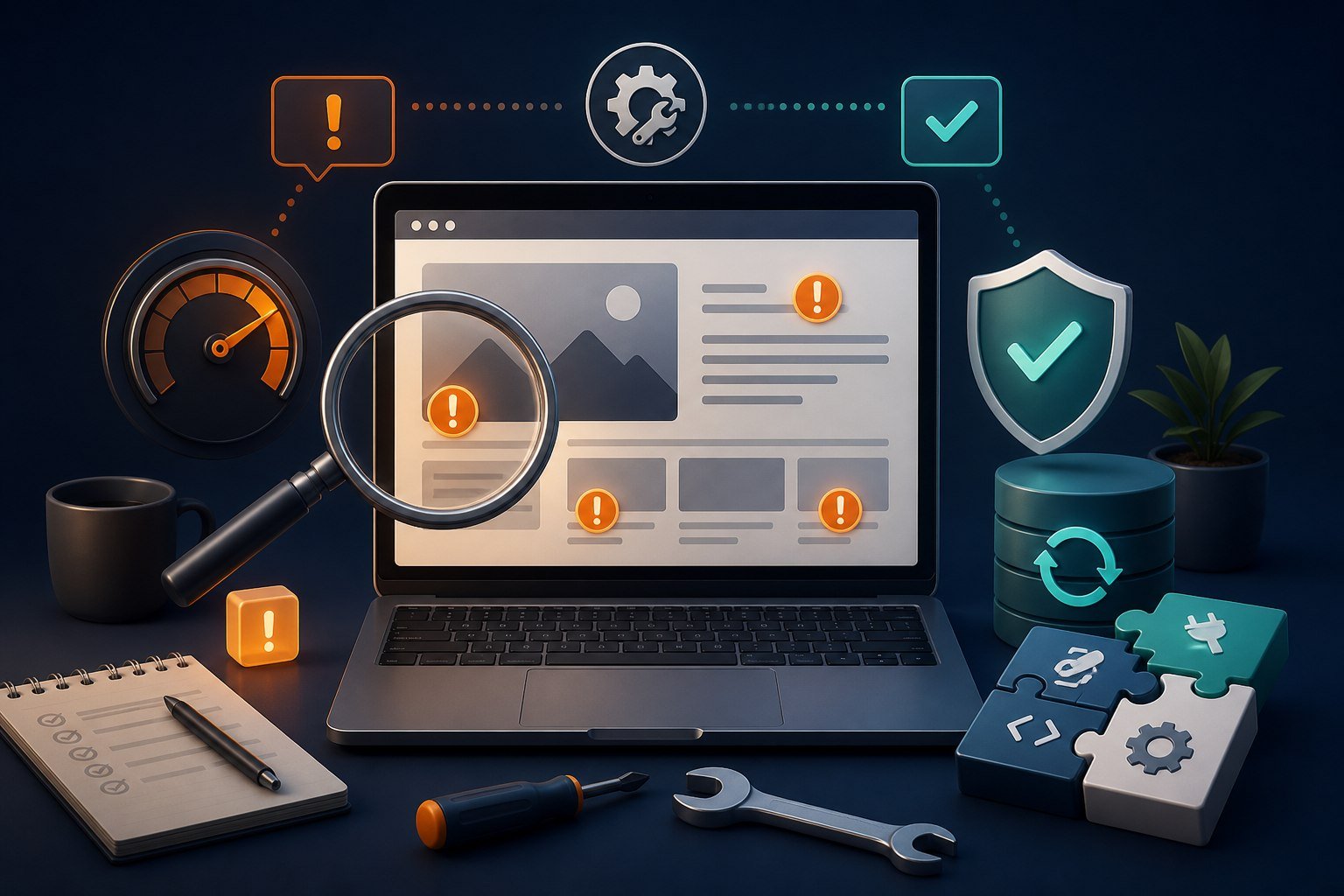
WordPress problems often appear after an update, configuration change, traffic spike or expired service. The safest response is to preserve evidence, avoid random changes and work from the least destructive explanation towards the more complex ones.
The website shows a critical error or blank page
Record the exact message and time. Check whether WordPress sent an administrator recovery email, and review the hosting error log if you understand it. A plugin or theme conflict, unsupported PHP version or exhausted resource limit may be involved. Do not repeatedly delete files from the server without a current backup.
You cannot sign in
Confirm that you are using the correct administrator URL and account. Use the normal password-reset process and check spam folders. If reset messages never arrive, the email delivery configuration or account address may need attention. Never send a password to an unknown “support” contact.
The layout changed after an update
Clear only the appropriate site, plugin and browser caches, then compare the page in a private window. Check whether the theme, page builder and add-ons are compatible versions. Restore a backup only after understanding what new content would be lost.
The site is slow
Identify whether the problem affects one page, the administrator area or the entire server. Large images, heavy sliders, too many active plugins, database overhead, external scripts and inadequate hosting are common contributors. Performance work should be measured; installing several optimisation plugins at once can make diagnosis harder.
Forms or email stopped arriving
Submit a controlled test and inspect the form entries if they are stored safely. Verify the receiving address, spam filtering and domain-email configuration. For important enquiries, use authenticated email delivery and monitoring instead of assuming every WordPress message will reach an inbox.
Call a professional immediately when:
- The site redirects to unfamiliar pages or contains unknown administrator accounts.
- Customer, order or personal data may have been exposed.
- The only available backup is unverified.
- The site is business-critical and every minute of downtime has a cost.
- You do not control the domain, hosting or required credentials.
- A change could affect payments, email or live orders.
What to provide when requesting help
Share the website address, exact symptoms, when the issue began, recent changes, screenshots and the hosting provider. Use a secure method for temporary credentials and revoke access when the work is complete.
For WordPress troubleshooting, maintenance or recovery planning, contact Stardetha. We will first clarify the problem and available evidence before proposing work.
Leave a Reply